
 Pro Football Focus · Fantasy platform
Turning proprietary football data into a year-round decision product.
PFF had differentiated data. The product challenge was turning that depth into confidence at the moments fantasy managers had to draft, set a lineup, make a waiver move, or plan for next season.
The category had no shortage of information.
League hosts
Free, familiar places where managers run leagues and transact.
Who should I draft, start, add, trade, or trust right now?
Advice and optimization tools
Rankings, projections, expert content, draft aids, and personalized recommendations.
Turn proprietary football intelligence into the clearest next decision.
PFF did not need to become another league host or generic rankings destination. I focused the product on making PFF’s data useful when users needed confidence under time pressure.
The product’s challenge was calendar-shaped.
The opportunity was not simply to drive game-week usage. It was to create a connected product system that earned return visits before, during, and after the season.
We designed around decisions, not features.
- PREPARE
How should I build my roster for this league?
- Product surface
- Mock Draft Simulator · Manual draft tools · Redraft and dynasty settings
- Why it matters
- Preparation is where a manager decides whether the product fits their league.
- DECIDE
What is the best move for my team this week?
- Product surface
- Matchups · Position-based views · Filters and stat toggles
- Why it matters
- It is the decision managers make every week, so it is where a habit forms.
- RETURN
What should I do when there is no lineup to set?
- Product surface
- Seasonal product states · Offseason navigation · Relevant next actions
- Why it matters
- Quiet periods are when a subscription is easiest to forget.
From data destination to decision product.
PFF did not need more data. It needed to make differentiated football intelligence useful at the exact moments fantasy managers had to decide.
- PFF data
- Rankings, stats, and standalone tools
- The user interprets the information alone
- One-time visit or isolated interaction
- PFF data
- League context, format settings, and relevant views
- A clearer decision in the moment
- A reason to return for the next decision
My roadmap filter was simple: prioritize work that made a high-frequency decision easier, made the product more relevant to a league format, or gave users a reason to return during a lower-engagement period.
- Makes a high-frequency decision easier
- Fits the user’s league format
- Gives a reason to return in a quiet period
The product system we built.
Matchups
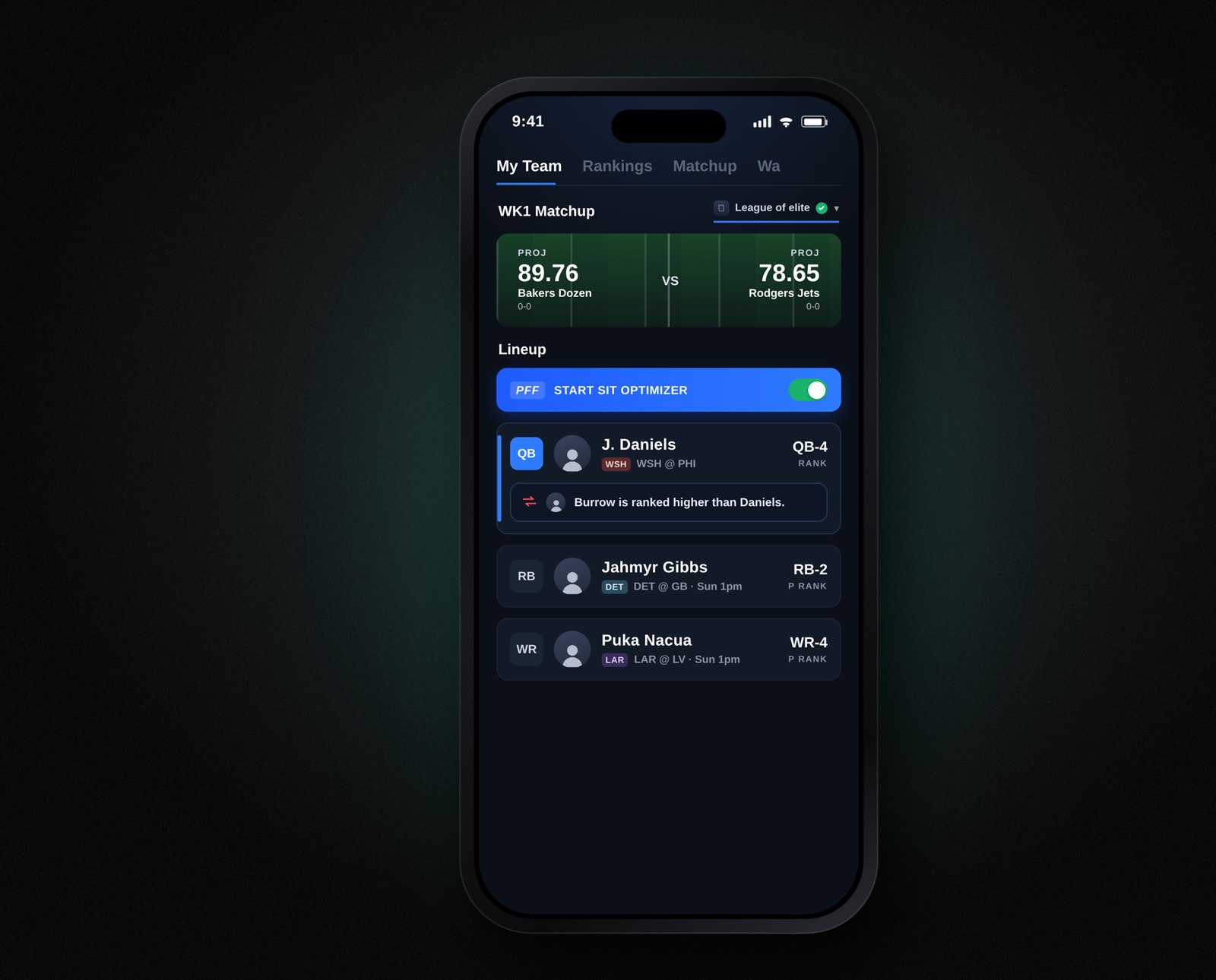
I led the end-to-end redesign of Matchups, organizing filters, position-based views, and stat toggles around the decisions managers needed to make quickly.
- 1Filter to the decision
- 2Compare the context that matters
- 3Make dense data usable at a glance
Draft tools
We enhanced the Mock Draft Simulator and manual draft tools with AI capabilities and flexible redraft and dynasty settings so preparation could reflect the league a user was actually entering.
Seasonal product states
I defined seasonal and offseason product states so the product surfaced a relevant next action even when game-week lineup decisions were not the primary user need.
We measured whether the product was creating a habit.
- 01Observed behaviorWhere managers dropped off, and why.
- 02HypothesisA specific change that should make a decision easier.
- 03ExperimentFeature flags to test the change before rollout.
- 04Behavioral evidenceRepeat usage, separated from one-time clicks.
- 05Roadmap decisionShip, iterate, or stop.
- 06Business outcome+10% weekly active usage.
We combined qualitative feedback with behavioral experimentation to separate one-time feature interest from repeat usage. Partnering with Data Science, we tracked whether the experience was becoming a healthier recurring habit.
A fantasy experience built for the full season.
- Clearer weekly decisions
- More meaningful engagement
- Stronger recurring usage
- Improved retention and subscription value
- +20%Matchups engagement
- +10%Weekly active usage
- +10–15%Offseason navigation engagement
- 10–15%Lift in weekly retention and subscriptions
PFF’s advantage was never simply more information. The work made that information more actionable, creating a product that could earn attention across the full fantasy calendar.
Building a product that needs to earn repeat behavior?
I lead product strategy and delivery with cross-functional teams across growth, retention, monetization, and customer experience.
Next case: Walt Disney World →